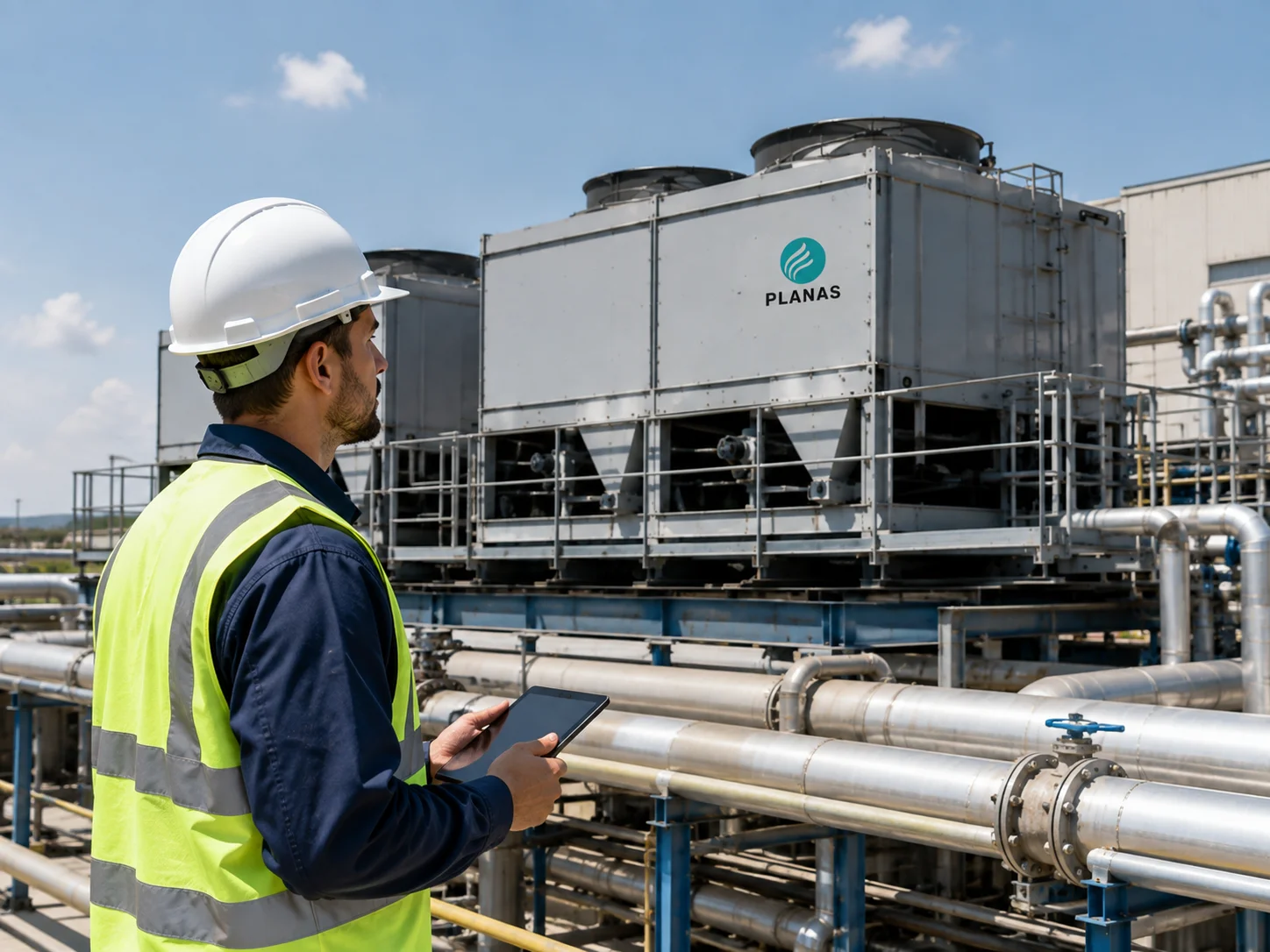
Horizontal Air-Cooled Heat Exchangers
Fans are located above or below the heat-exchange section and create a vertical airflow. This is the most common design.
Industrial cooling systems
Heat-exchange equipment that cools liquids and gases using atmospheric air. It operates without water evaporation and is suitable for air conditioning, cooling systems, and process applications.
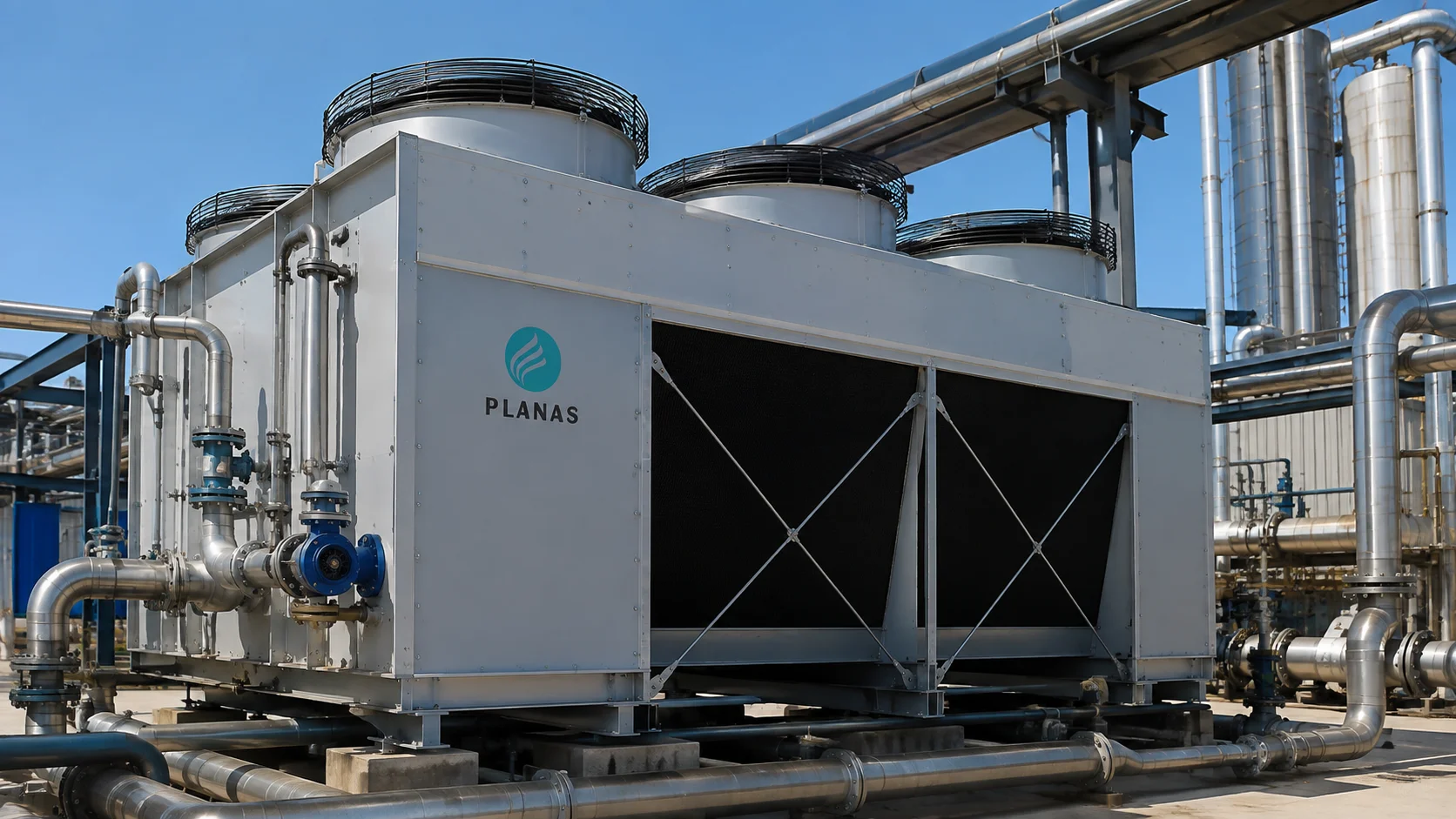
An air-cooled heat exchanger is heat-exchange equipment in which liquid or gas is cooled by atmospheric air. Unlike cooling towers, it does not evaporate water: heat is transferred directly to the airflow through the walls of finned tubes. As a result, air-cooled heat exchangers do not require continuous make-up water and are particularly in demand in regions with limited water resources. This equipment is used in air conditioning and central cooling systems, on production lines, and to remove heat from process equipment.
Design and operating principle
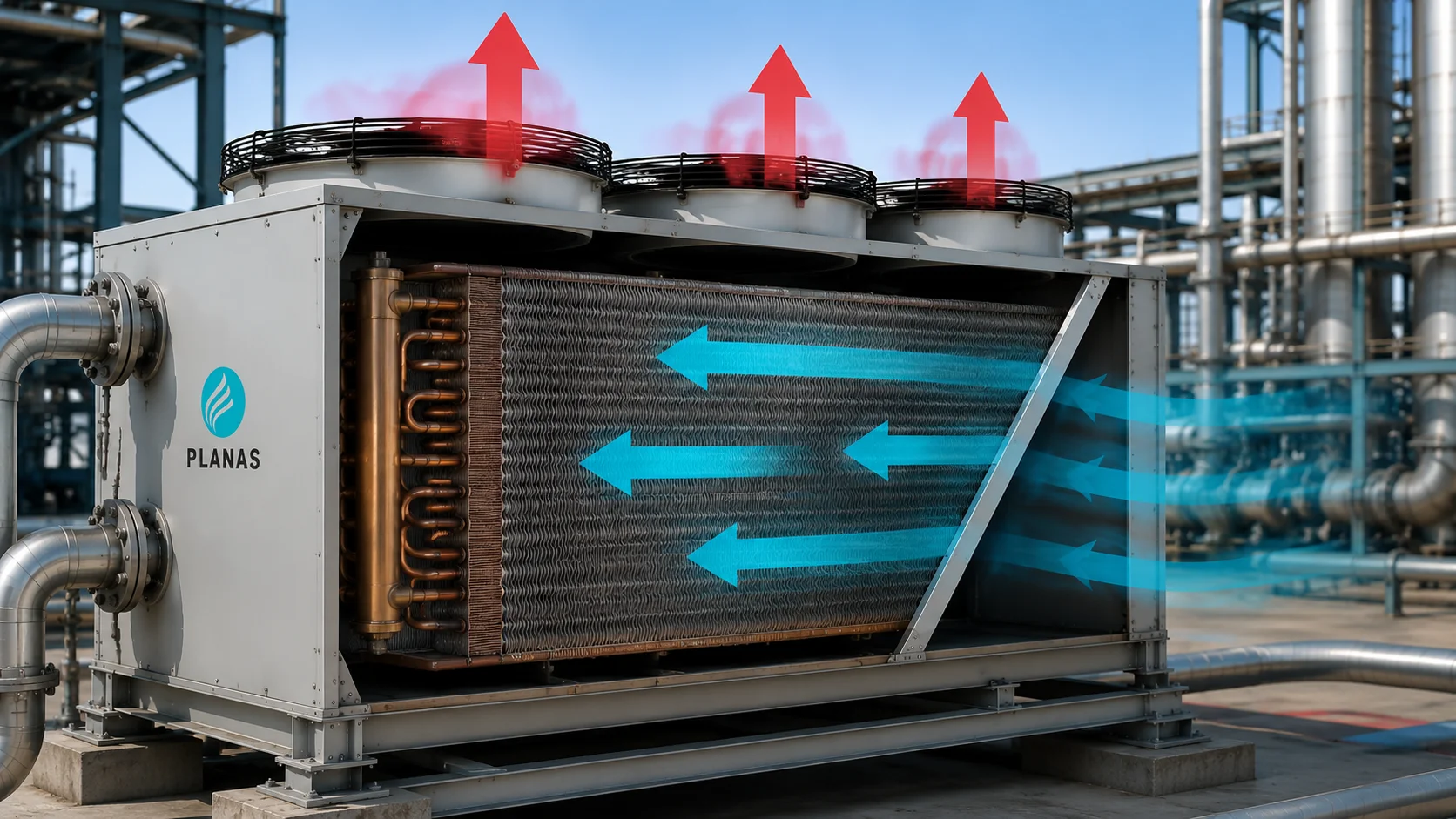
Hot liquid or gas enters the heat-exchange section and flows through finned tubes. At the same time, fans create a stream of outdoor air that passes over the tube surfaces and removes heat.
The cooled medium leaves the unit and returns to the process system, while the heated air is discharged into the environment. Since no water evaporates, the equipment does not need continuous make-up water.
The main components are the heat-exchange section, axial fans, electric motors, headers, casing, and automatic control system. The design can be horizontal, vertical, or V-shaped.
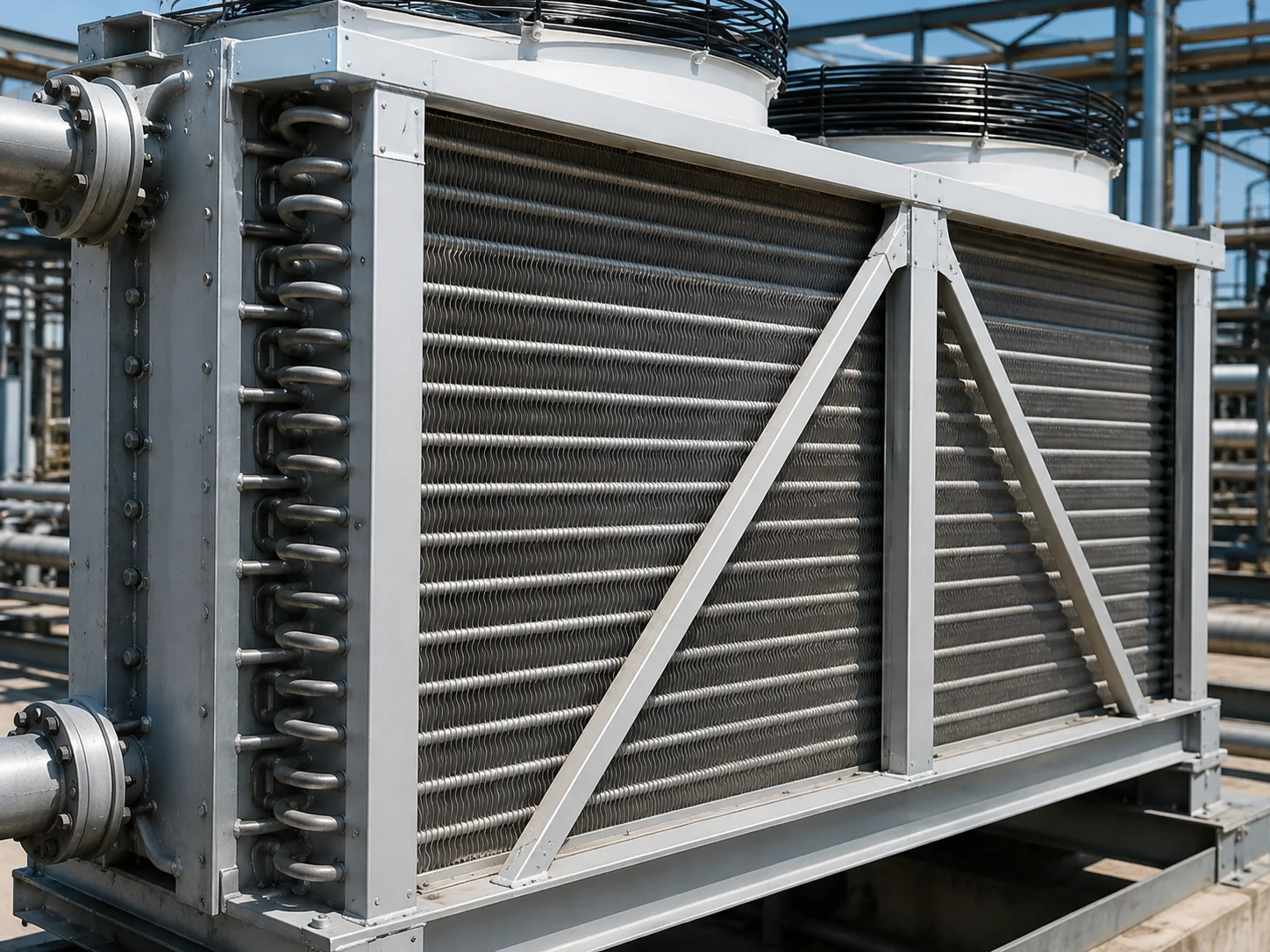
The equipment is used in air conditioning and cooling systems and at industrial facilities where heat must be removed from liquids or gases. Air-cooled heat exchangers are suitable for sites with limited water resources and high reliability requirements.
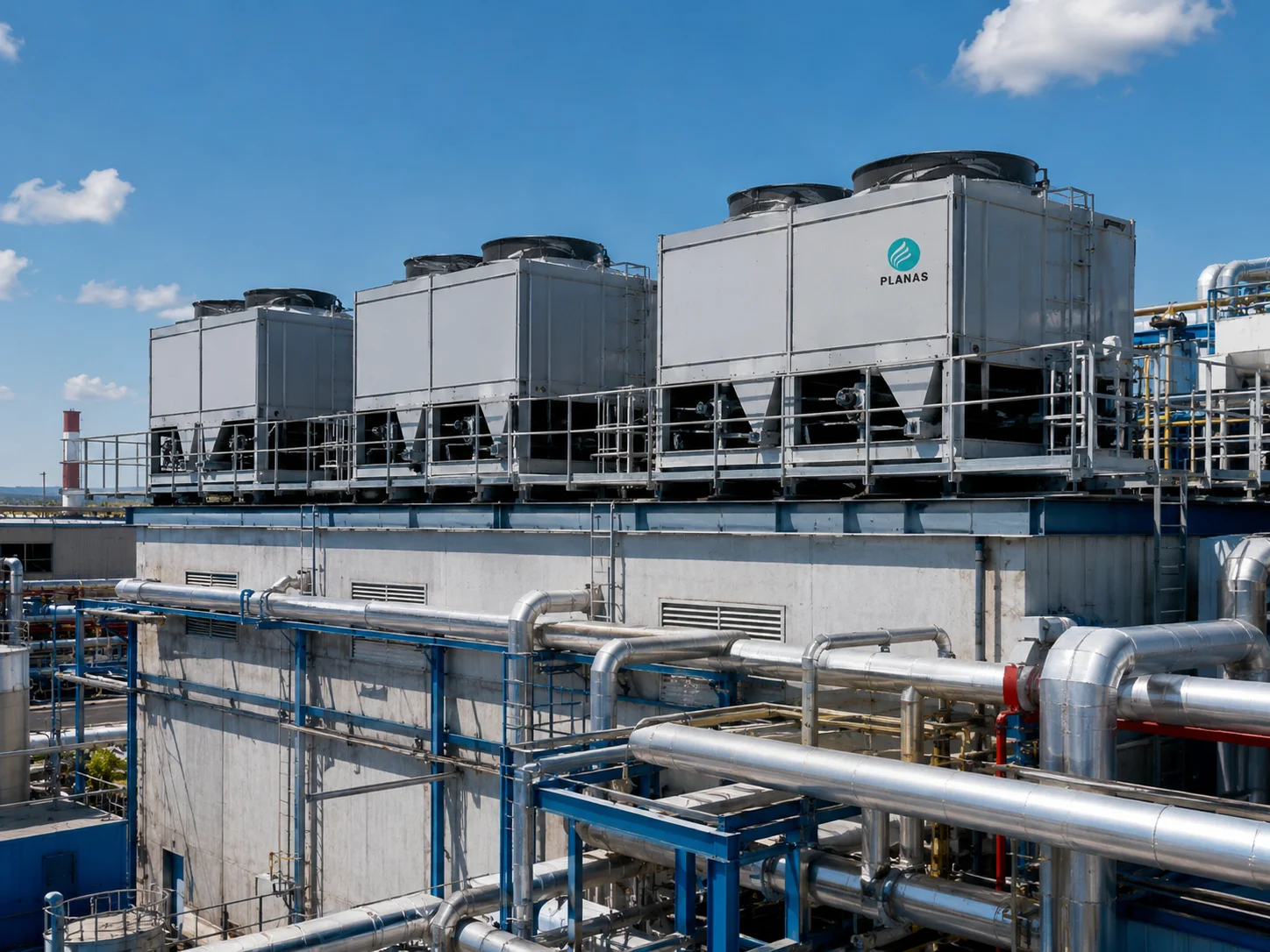
Submit an inquiry, and a Planas specialist will help select an air-cooled heat exchanger to suit your facility. An engineer will confirm the heat load, type of medium to be cooled, flow rate, inlet and outlet temperatures, and site climate conditions.
Working across all of Kazakhstan
Design options
Air-cooled heat exchangers differ in design and in how the airflow is arranged. The choice depends on the available installation area, heat load, and process requirements.
Fans are located above or below the heat-exchange section and create a vertical airflow. This is the most common design.
A compact solution for facilities with limited space and for specialized process applications.
The heat-exchange modules are installed at an angle, increasing the heat-transfer area while reducing the footprint.
Fans force air through the heat exchanger, ensuring stable performance regardless of weather conditions.
Fans draw air through the heat-transfer surface, reducing the risk of hot-air recirculation.
Options include constant speed, step control, or stepless control using variable-frequency drives.
Cooling is achieved by transferring heat from the hot medium to atmospheric airflow through the walls of the heat-exchange section.
Hot liquid or gas enters the heat exchanger.
Fans drive atmospheric air through the finned tubes.
The air removes heat from the working medium through the tube walls.
The cooled medium leaves the unit and continues circulating.
The heated air is discharged into the environment.
Equipment selection
To select the right air-cooled heat exchanger, it is important to provide details about the heat load, type of medium to be cooled, temperatures, flow rate, and site conditions.
Air-cooled heat exchangers are in demand where operating costs need to be reduced while maintaining process stability.
Cooling is provided by air, so the system does not require continuous make-up water.
No water-treatment costs and simple operation reduce the total cost of ownership.
The units are designed for long-term operation in a range of climate conditions.
Regular cleaning of the heat exchangers and inspection of the fan assembly are sufficient.
The control system maintains the required temperature and adjusts fan performance.
The process does not involve water evaporation and reduces pressure on water resources.
Klimatrade — your climate solutions partner
We supply climate control equipment for commercial and industrial facilities through professional partners, design organizations, and installation companies. We provide support at every stage, from equipment selection to technical assistance.
If you are looking to buy an air-cooled heat exchanger, submit an inquiry and we will calculate the parameters, select a design, and prepare a commercial proposal. The price of an air-cooled heat exchanger depends on its capacity, heat-exchange section type, materials, number of fans, configuration, operating conditions, and project requirements. Klimatrade specialists select air-cooled heat exchangers to match facility requirements, including the working medium, heat load, inlet and outlet temperatures, flow rate, pressure, climate conditions, heat-exchanger material requirements, and operating mode. Depending on the application, we can select a horizontal or vertical air-cooled heat exchanger, including equipment with axial fans, variable-frequency control, and an automatic control system. We supply air-cooled heat exchangers throughout Kazakhstan for industrial and engineering facilities. Air-cooled heat exchangers are available in Almaty and Astana, with delivery to other regions of the country. Submit an inquiry and Klimatrade specialists will help select an air-cooled heat exchanger for your facility and recommend a solution for reliable process cooling.
An air-cooled heat exchanger is heat-exchange equipment that cools liquid or gas using atmospheric airflow. Unlike cooling towers, it does not consume water for cooling.
The equipment is used at industrial facilities, in power generation, the oil and gas and chemical industries, in air conditioning and cooling systems, and on process lines.
Selection takes into account the heat load, type of medium to be cooled, inlet and outlet temperatures, liquid or gas flow rate, climate conditions, and facility-specific requirements.
Yes. Air-cooled heat exchangers can operate year-round. Automatic control and freeze protection are provided to ensure stable operation in cold weather.
Maintenance includes cleaning the heat exchangers, inspecting fans and electric motors, checking fasteners, and diagnosing the control system and electrical components.
Modern air-cooled heat exchangers can be equipped with an automatic control system that adjusts fan performance and maintains the specified cooling temperature.
Discuss your project
Contact a Planas engineer to discuss your cooling requirements, installation details, and the right equipment configuration.