Cooling equipment
Dry Coolers
Efficient cooling of water and water-glycol solutions by atmospheric air without evaporation and heat transfer fluid losses. Reliable solution for free cooling systems, chillers, and industrial processes.
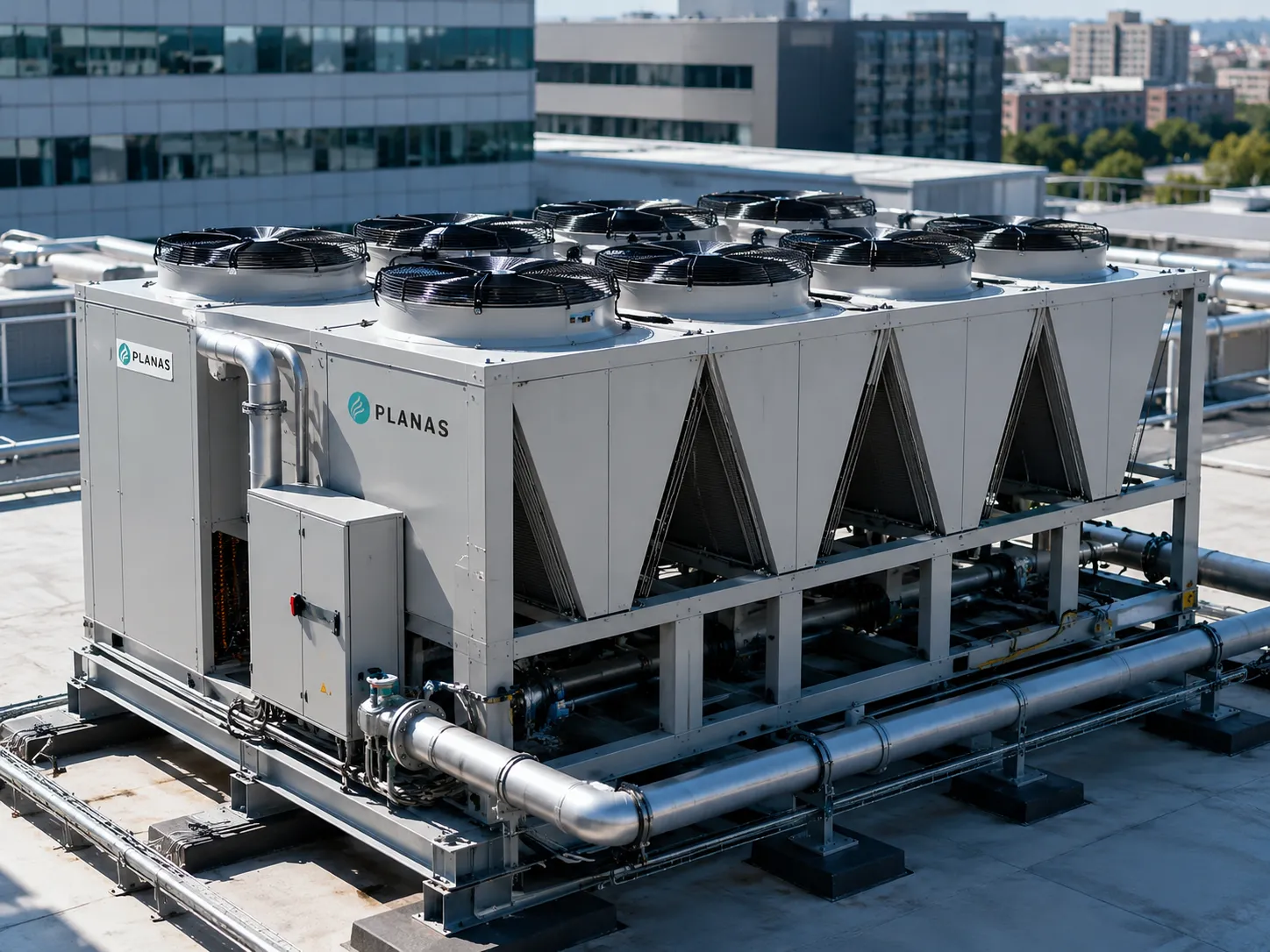
- No water consumptionNo evaporation and heat transfer fluid losses.
- Closed loopThe coolant does not get contaminated or lost.
- Automatic modeFan performance adjustment depending on load.
- Energy consumption reductionUse of Free Cooling mode for savings.
- Long service lifeMore than 15–20 years of efficient operation.
- Simple maintenanceRegular cleaning of the heat exchanger and checking of the automation.
What is a dry cooler
Operating principle and purpose
A dry cooler (Dry Cooler) is a heat exchange equipment designed to cool water or another coolant using outside air without direct contact of the liquid with the environment. It may seem that this operating principle is similar to a cooling tower, and this is partly true, since in essence both types of equipment cool water, but unlike a cooling tower, in a dry cooler there is no evaporation of water, so it is often called a 'dry cooling tower'.
Dry coolers are widely used together with chillers, free cooling systems, industrial equipment, and process lines where it is necessary to efficiently dissipate excess heat. In cold weather, dry coolers reduce the load on refrigeration machines, increasing the overall energy efficiency of the system.
When choosing a dry cooler, it is necessary to consider: outdoor placement, free space for air circulation, noise requirements, access for maintenance, and protection of the coolant from freezing in winter.
Areas of application
Where are dry coolers used
Dry coolers are suitable for various facilities and systems where excess heat removal is required.
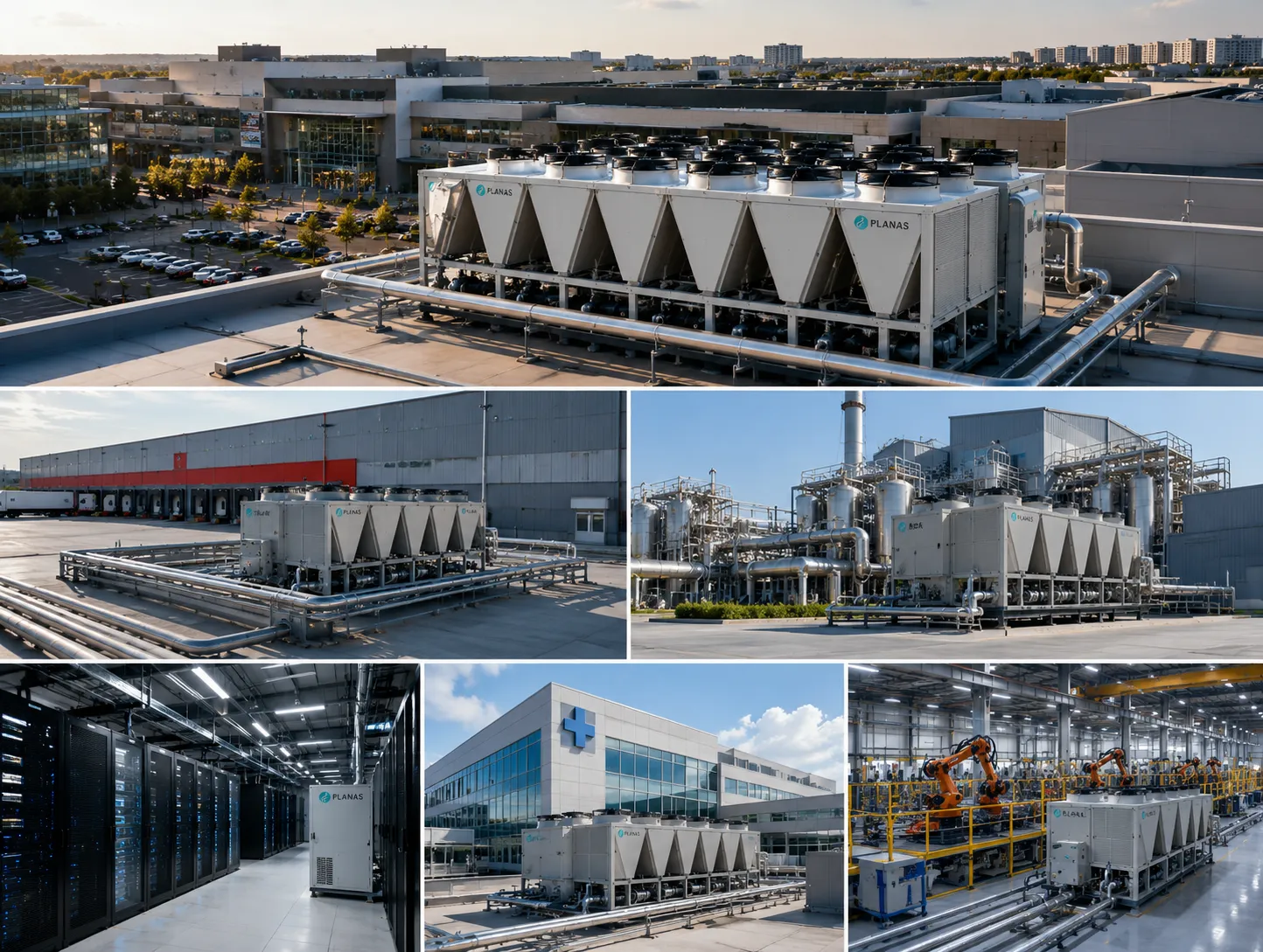
- 01Shopping centersEnsuring a comfortable microclimate and cooling of equipment.
- 02Warehouse complexesMaintaining storage temperature conditions.
- 03Manufacturing enterprisesHeat removal from production lines.
- 04Data centersYear-round cooling of server equipment with free cooling capability.
- 05Medical institutionsCooling of medical equipment and air conditioning systems.
- 06Technological lines and production processesCooling of water or technological fluids.
- 07Objects with chiller cooling systemsJoint operation with chillers to improve energy efficiency.
Types of dry coolers
Types of execution
Depending on the design and additional functions, dry coolers are divided into several types.
Standard dry coolers
Designed for cooling water or glycol solutions using ambient air and are used in most engineering systems.
Dry coolers with adiabatic cooling
Equipped with an incoming air humidification system. In hot weather, this allows to additionally reduce the temperature of the coolant and increase the efficiency of the equipment.
V-shaped dry coolers
Heat exchange sections are located at an angle to each other, which increases the heat exchange area while maintaining a compact installation size.
Horizontal dry coolers
Fans and heat exchangers are arranged horizontally. Suitable for installation on building roofs and open technical platforms.
Vertical dry coolers
They feature a vertical layout and are used where it is necessary to optimally use available space.
Operating principle
How a dry cooler works
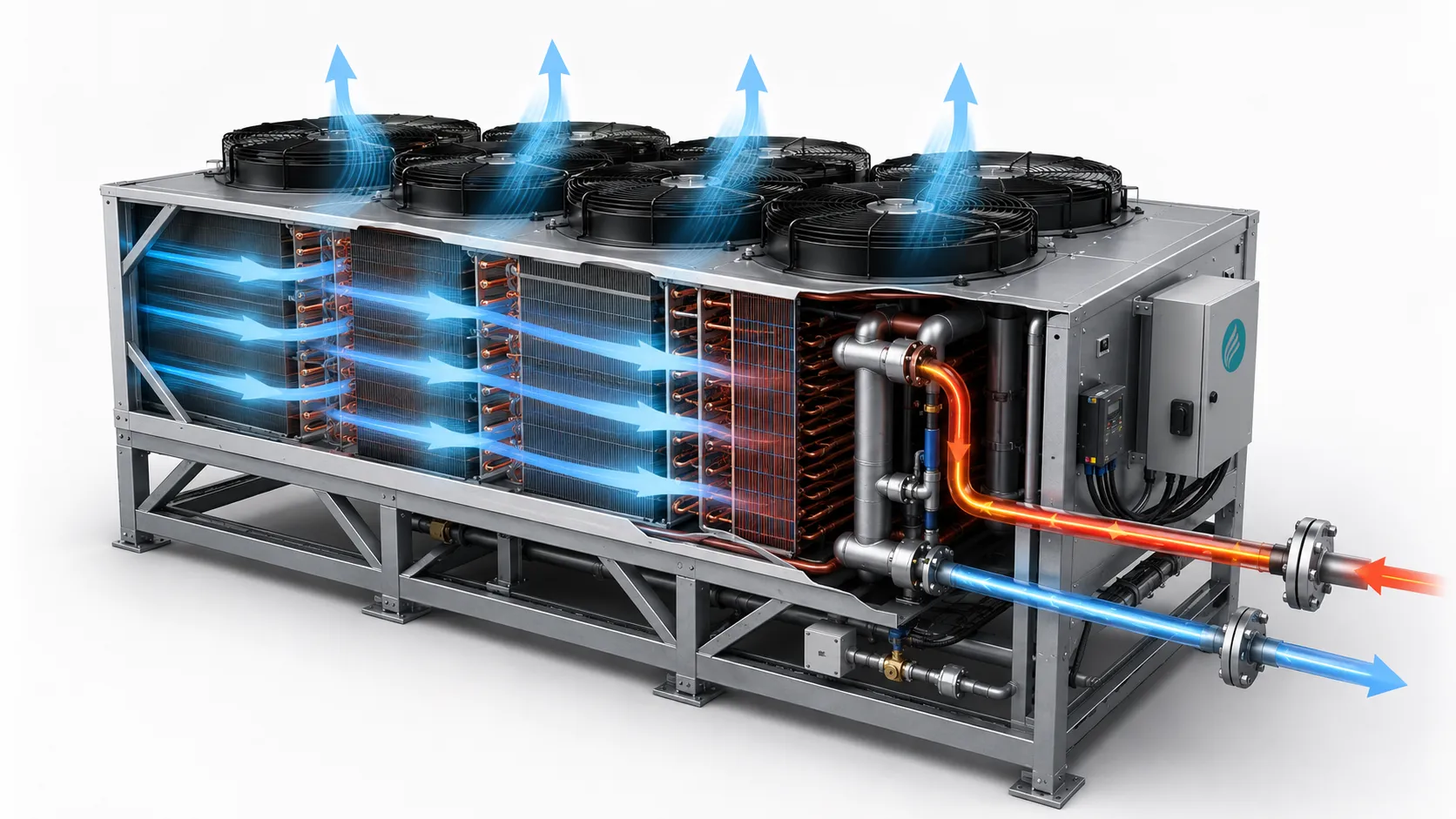
Heat from the fluid is transferred to the ambient air through the heat exchanger.
01
Heat transfer fluid supply
The heated coolant enters the heat exchanger.
02
Air supply
Fans supply outside air through the heat exchange surface.
03
Heat transfer
Heat is transferred from liquid to air.
04
Return of cooled liquid
The cooled heat transfer fluid returns to the system.
05
Automatic control
The automation regulates the fan performance depending on the load and outside air temperature.
Advantages
Why choose dry coolers
The use of dry coolers offers a number of advantages over other cooling systems.
01
No water flow
No evaporation losses, no constant replenishment required.
02
Closed loop
The coolant does not become contaminated and is practically not lost during operation.
03
Simple maintenance
Regular cleaning of the heat exchanger and checking of the fans with automation.
04
Low operating costs
Minimum costs for water and maintenance.
05
Long service life
With proper operation, the equipment operates for more than 15–20 years.
06
High reliability
Simple design with minimal moving parts.
07
Automatic mode
Ability to operate without constant personnel presence.
08
Reduced energy consumption
Free Cooling mode saves electricity in cold weather.
Equipment selection
How to choose a dry cooler
For proper selection, it is necessary to consider the following parameters of the facility and operating conditions.
- Thermal power of the system
- Coolant flow rate
- Inlet and outlet fluid temperature
- Outside air temperature
- Type of coolant used (water, water-glycol solution, special fluids)
- Permissible noise level
- Installation location (roof, open area, availability of free space)
- Climatic conditions of the region

Service and support
Klimatrade – your partner in climate
We supply climate equipment for commercial and industrial facilities through professional partners, design organizations and installation companies.
- Selection of equipment for project tasks
- Technical consultations
- Assistance to designers and engineers
- Preparation of technical and commercial proposals
- Technical support at all stages of project implementation
Buy a dry cooler for a cooling system
If you need a dry fluid cooler for an industrial facility, chiller, data center or production line, Klimatrade specialists will help you select equipment according to your project parameters. An air-cooled fluid cooler operates without water evaporation and is suitable for systems where reliability, efficiency and easy maintenance are important.
Each mechanical-draft cooling tower is selected individually, taking into account the heat load, water flow rate, required temperatures, installation region and operating conditions. Therefore, the cooling tower price is calculated after the technical parameters have been specified.
The dry cooler price depends on cooling capacity, heat exchanger type, fans, automation, operating conditions and delivery region. Dry coolers are available for Almaty, Astana and other cities across Kazakhstan. Submit a request, and we will select a solution for your facility.
Frequently asked questions
FAQ on dry coolers
Answers to popular questions about dry cooling towers.
What is a dry cooler?
A dry cooler is a heat exchange equipment designed to cool water or a water-glycol solution using outdoor air.
Where are dry coolers used?
They are used in industrial enterprises, warehouses, shopping centers, data centers, medical facilities, and other facilities with cooling systems.
How is a dry cooler different from a cooling tower?
A dry cooler operates in a closed circuit and does not use water evaporation for cooling. This eliminates water consumption and simplifies maintenance.
Can a dry cooler be used in winter?
Yes. Moreover, during the cold season, the equipment can be used for free cooling, reducing the load on chillers.
How to select a dry cooler?
For selection, it is necessary to consider the thermal load of the object, coolant temperature, climatic conditions of the region, and system operation features.
What is the service life of the dry cooler?
With proper operation and timely maintenance, the equipment can operate effectively for more than 15–20 years.
Is maintenance required?
Yes. It is recommended to regularly clean the heat exchanger, check fans, automation, and condition of the coolant.
Ready to cooperate?
Contact us
Get a consultation on selecting a dry cooler for your facility. We will help you choose the optimal solution considering all technical requirements.