By installation method
Built-in chambers form a section of an air handling unit and are installed at the factory or on site as part of the central unit. Separate (duct-mounted) chambers are installed in the duct network as standalone components.
Planas ventilation equipment
A mixing chamber is a section of a ventilation system where fresh outdoor air mixes with recirculated air from the premises. It allows the proportion of fresh air to be adjusted and the heat or cooling of already conditioned air to be reused, helping the system operate more efficiently and maintain a comfortable indoor climate.
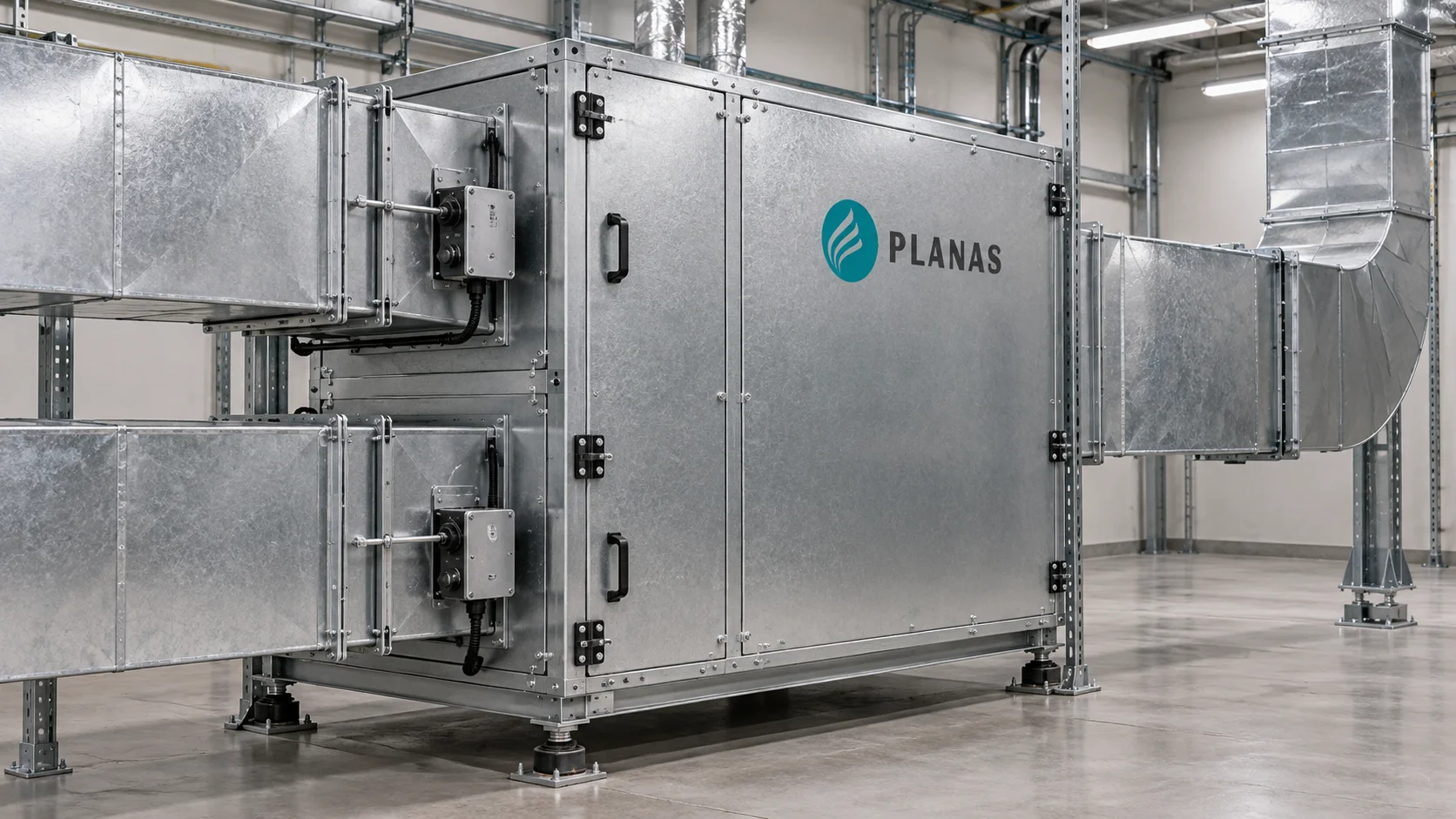
A mixing chamber is a housing with two or more inlet connections and one outlet connection. Fresh outdoor air and air drawn from the premises enter through separate connections. Air dampers regulate the ratio of the air streams; inside the housing, the streams mix to achieve the required temperature and composition. The resulting mixture is then sent further through the ventilation system for filtration, heating and cooling, or directly into the premises. Reusing heat from already conditioned air reduces the load on heaters and coolers, and therefore lowers operating costs. The main components are the housing, usually made of galvanized steel; outdoor-air and recirculated-air dampers; electric actuators or manual controls; seals and thermal insulation; and inspection hatches for maintenance. The controls can adjust damper positions in real time, balancing the supply of fresh air with energy savings. Mixing chambers can be installed as a section of a supply or supply-and-exhaust air handling unit, or as a separate component in the duct network. When selecting a chamber, consider the project-specific ratio of outdoor to recirculated air, whether damper adjustment is required, housing airtightness and insulation requirements, access for maintenance and cleaning, and compatibility with the existing unit or ductwork.
Design
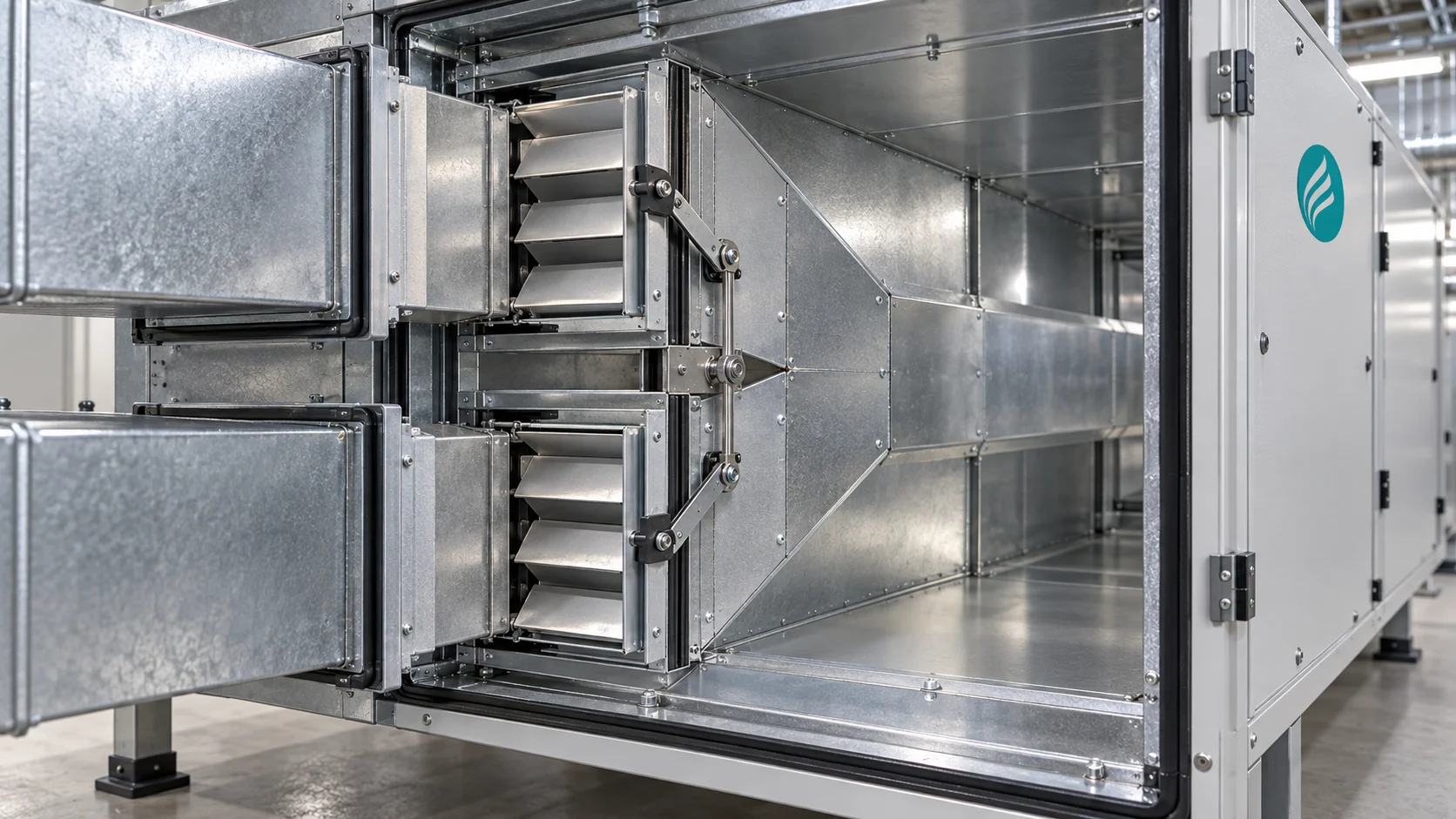
A housing with two inlet connections for outdoor and recirculated air and one outlet connection for the prepared air mixture.
Outdoor-air and recirculated-air dampers (valves), along with electric actuators or manual controls.
Housing seals and thermal insulation, plus inspection hatches for maintenance and cleaning the internal surfaces.
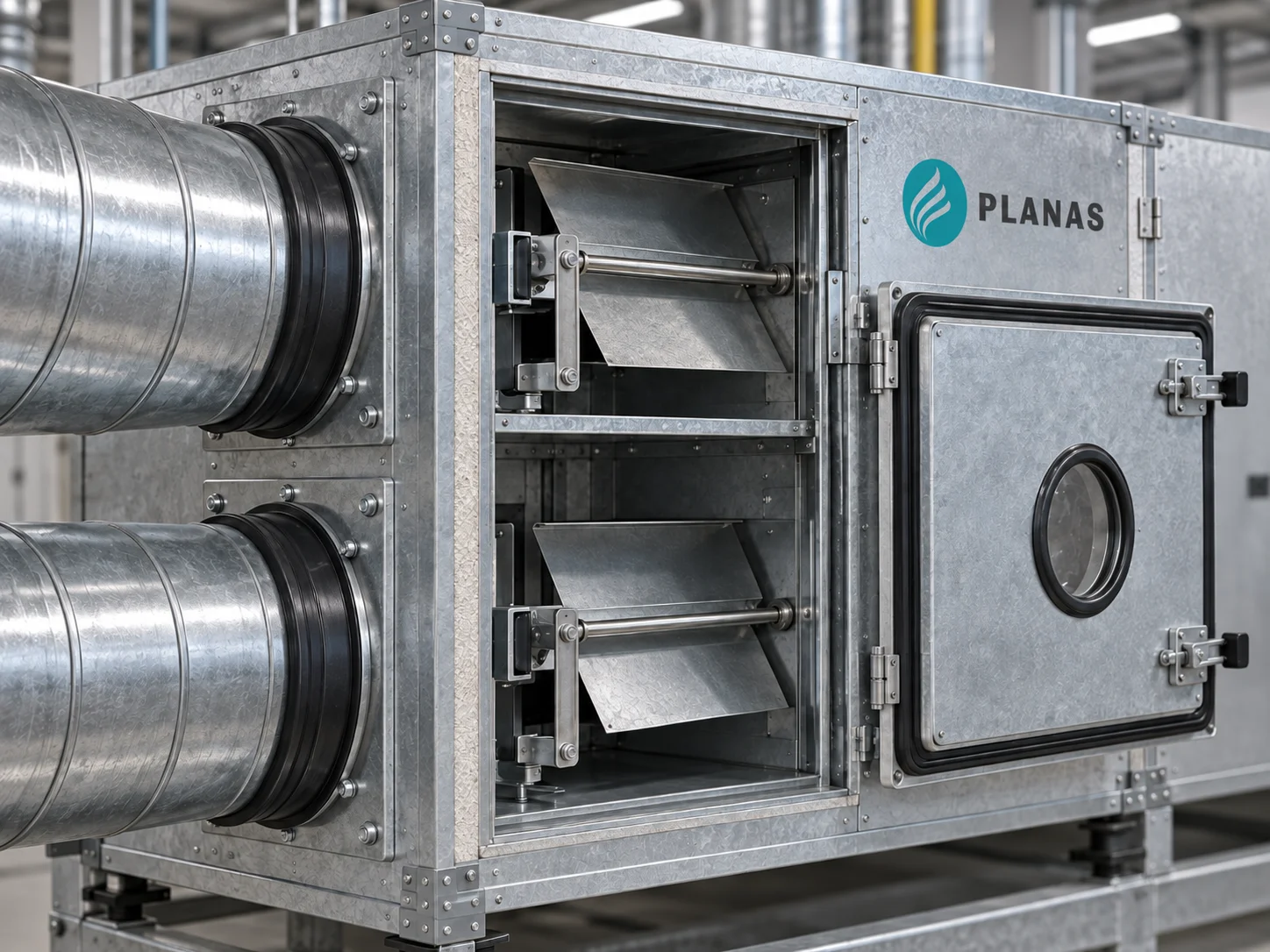
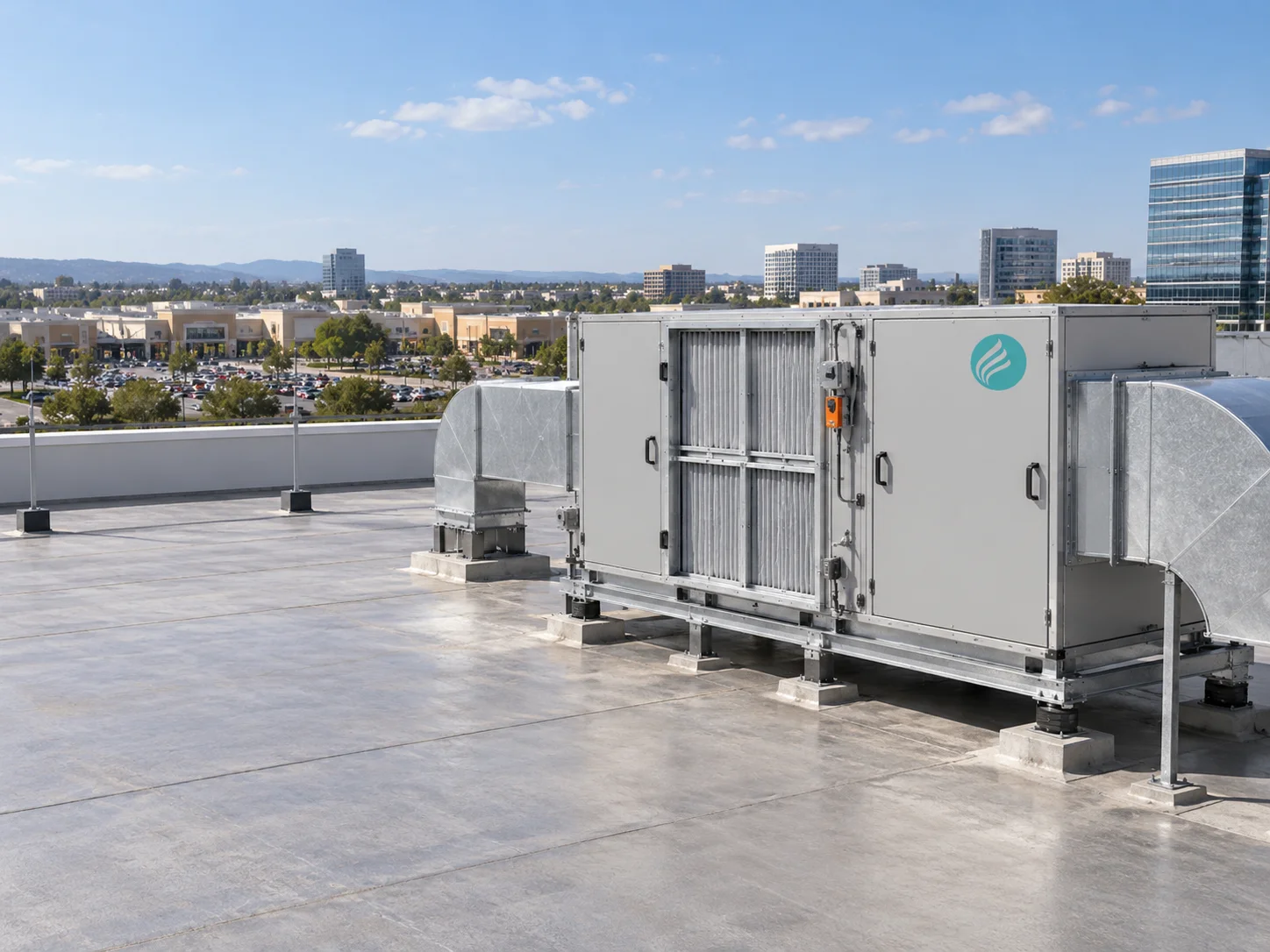
Mixing chambers are used where central ventilation is in operation and it is important to reduce energy consumption for heating and cooling air. The type and configuration are selected to suit the specific facility and operating conditions.
A Planas specialist will help identify the right chamber configuration for your facility, including the unit type, damper control method, and airtightness and insulation requirements. Fill out the form and we’ll confirm the initial details and prepare a proposal.
Working across all of Kazakhstan
Configuration options
The configuration is selected for the project based on the installation method, damper control type, and operating requirements.
Built-in chambers form a section of an air handling unit and are installed at the factory or on site as part of the central unit. Separate (duct-mounted) chambers are installed in the duct network as standalone components.
Manual control — damper positions are set by hand, a simple solution for systems operating in a constant mode. Electric actuator — dampers are adjusted automatically in response to a control system signal, changing the proportion of fresh air according to the facility’s operating mode.
Standard — for normal operating conditions. Insulated and airtight — with additional thermal insulation and seals for handling cold outdoor air and meeting higher energy-efficiency requirements. With filtration — includes a pre-filtration section.
The operating principle is based on mixing two air streams and adjusting their ratio directly inside the chamber housing.
Fresh outdoor air and air from the premises enter the chamber through separate inlet connections.
Air dampers set the ratio of outdoor and recirculated air streams according to the project design and system operating mode.
The air streams mix inside the housing to achieve the required temperature and composition.
The prepared mixture is sent for further treatment — filtration, heating, or cooling — or directly into the premises.
Equipment selection
To recommend the right solution, a specialist needs the initial details about the facility and ventilation system. Selection is based on airflow, duct type, control requirements, and operating conditions — calculations are best entrusted to engineers.
A mixing chamber makes ventilation system operation more predictable and efficient while maintaining comfortable air conditions in the premises.
Recirculation allows heat or cooling from already conditioned air to be reused.
The damper-set proportion of fresh air can be changed according to the facility’s operating mode.
The air mixture is supplied to the premises at the required temperature and with the required composition.
Less load on heaters and coolers when conditioning supply air.
The chamber can be built into a unit or installed in an existing duct network.
Damper actuators operate in response to signals from the control system.
The housing, dampers, seals, and thermal insulation are designed for long-term operation.
Savings on air heating and cooling reduce overall ventilation costs.
Why Klimatrade
Klimatrade supplies climate control equipment for commercial and industrial facilities through professional partners, design organizations, and installation companies. We help select equipment to meet project requirements, provide technical advice, support designers and engineers, prepare technical and commercial proposals, and arrange delivery from our warehouses in Almaty and Shymkent. Technical support is available at every stage of project implementation, and warranty service is provided through service partners.
If you need a mixing chamber for an air handling unit, an engineering facility, or an upgrade to an existing system, Klimatrade specialists will help select equipment to meet your requirements. We supply Planas mixing chambers for a range of applications, from office and retail buildings to hotels, industrial facilities, and warehouses with central ventilation. Each mixing chamber is selected individually, taking into account airflow, the ratio of outdoor to recirculated air, damper control requirements, housing airtightness and thermal insulation, operating conditions, and access for maintenance. For this reason, the cost is calculated after the facility’s technical details have been confirmed. Klimatrade specialists will help select a mixing chamber to suit your facility’s requirements: airflow, the ratio of outdoor to recirculated air, damper control requirements, housing airtightness and thermal insulation, operating conditions, and access for maintenance. Equipment is selected individually for every project. If you’re planning to buy a mixing chamber for an air handling unit, an upgrade to an existing system, or a new engineering project, submit an inquiry. We’ll calculate the specifications, select the configuration, and prepare a commercial proposal. The price of a mixing chamber depends on capacity, dimensions, housing configuration, automation, materials, and the facility’s technical requirements. We supply Planas mixing chambers throughout Kazakhstan. Delivery is available to Almaty, Astana, Shymkent, and other cities. Submit an inquiry and Klimatrade specialists will help find the right solution for your ventilation system and calculate the equipment cost.
It is a section or standalone component of a ventilation system where fresh outdoor air mixes with recirculated air from the premises. This mixing helps save energy and maintain a comfortable indoor climate.
It allows heat from already heated air to be reused and the amount of fresh air to be adjusted precisely. This reduces heating and cooling costs.
It can be installed as a section of an air handling unit or as a separate component in the duct network, upstream or downstream of fans and heat exchangers.
Yes. In models with electric actuators, the proportion of fresh air changes automatically in response to a control system signal. In simpler versions, damper positions are set manually.
Automatic control is recommended for efficient operation. It allows the system to adapt to the facility’s actual conditions and save additional energy.
They are particularly useful in buildings with central ventilation where reducing energy consumption is important, including offices, shopping centers, hotels, industrial facilities, and warehouses.
Selection is based on airflow, duct type, control requirements, and operating conditions. It is best to leave the calculations to specialists.
Yes. Damper, actuator, and seal operation should be checked periodically, and dust should be removed from the inside surfaces of the housing.
Consultation
Tell us about your ventilation system parameters and air control requirements. A Planas specialist will help determine the right mixing chamber configuration and prepare a supply proposal.